Pain Points & Technical Challenges
Under a high differential pressure of at least 35 MPa, flow velocity through a wellhead choke valve increases sharply, causing cavitation and flashing. High-frequency valve-spool vibration, with a fundamental frequency near 120 Hz, travels directly through the stem to the spring diaphragm of a conventional pneumatic actuator. Diaphragm fatigue and tearing require replacement about every 45 days and cause major production losses.
On offshore platforms, long hydraulic supply lines from the hydraulic power unit experience pressure-drop variation with ambient temperature. Sun exposure can heat the pipe wall to 60?C during the day, reducing oil viscosity and increasing actuator speed by 15%. At night, temperature can fall to 10?C and increase response delay. Fixed PID settings cannot adapt, and valve-opening oscillation can reach ?8%.
Yiruiju Customized Technical Solutions
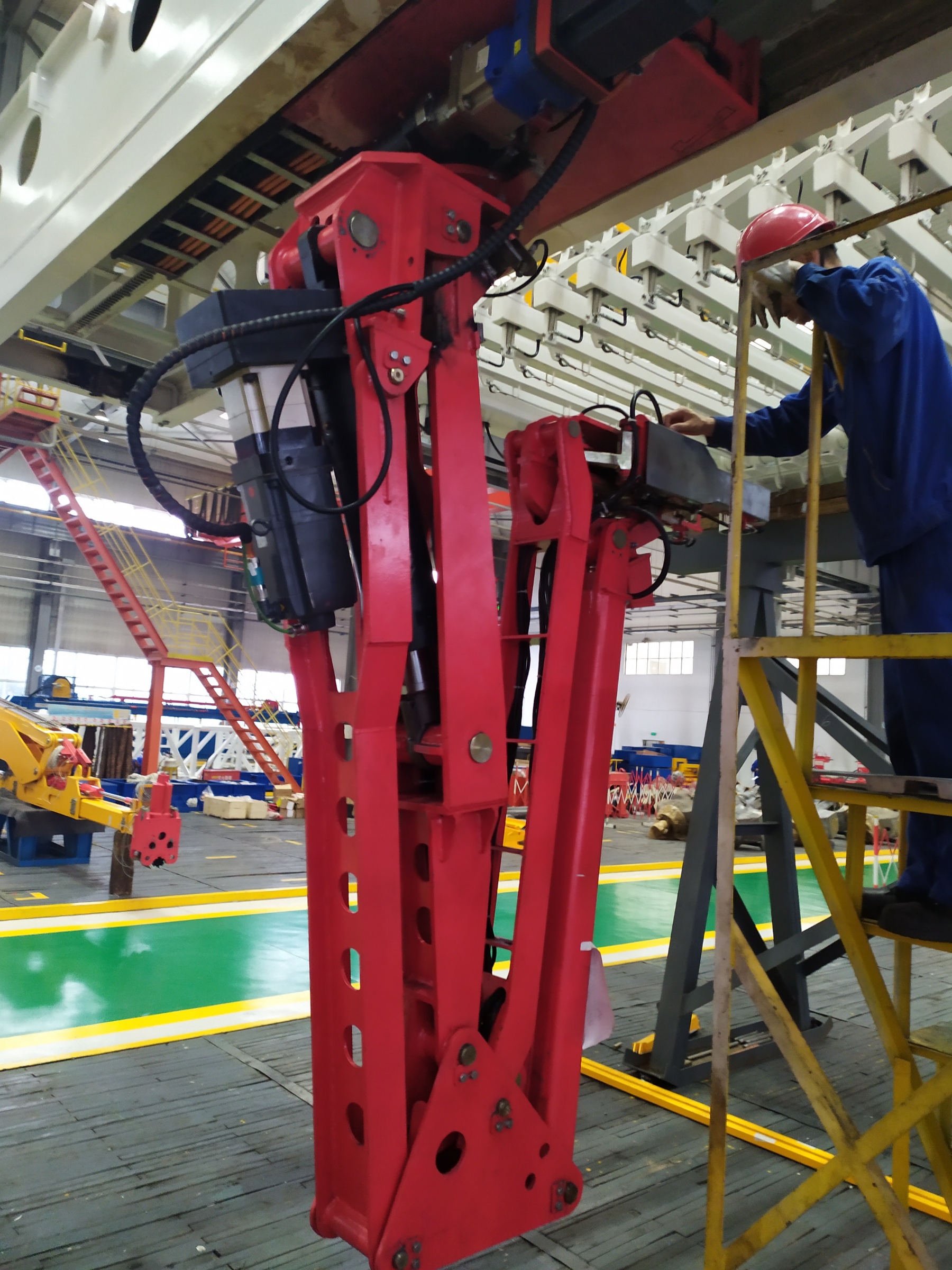
An explosion-proof Ex d IIC T4 heavy-duty planetary-roller-screw electric cylinder rigidly drives the valve stem, eliminating the hydraulic diaphragm actuator and long supply lines. A built-in accelerometer monitors axial stem vibration. A notch filter actively suppresses resonance energy near 120 Hz, reducing vibration amplitude to one tenth and extending stem-packing life beyond three years.
The servo drive includes ambient-temperature compensation. It reads enclosure temperature in real time and uses a stored grease viscosity-temperature database covering ?40?C to +85?C to adjust velocity-loop PID gains dynamically. Stroke deviation remains within ?0.1 mm across the full temperature range, and valve-opening linearity reaches ?0.5%.
Hardware-redundant absolute position retention is provided. If power fails, a supercapacitor module powers the cylinder back to a preset safe position?fully open or fully closed?and then applies a mechanical brake. Response is within 80 ms and meets SIL 2 functional-safety requirements.